


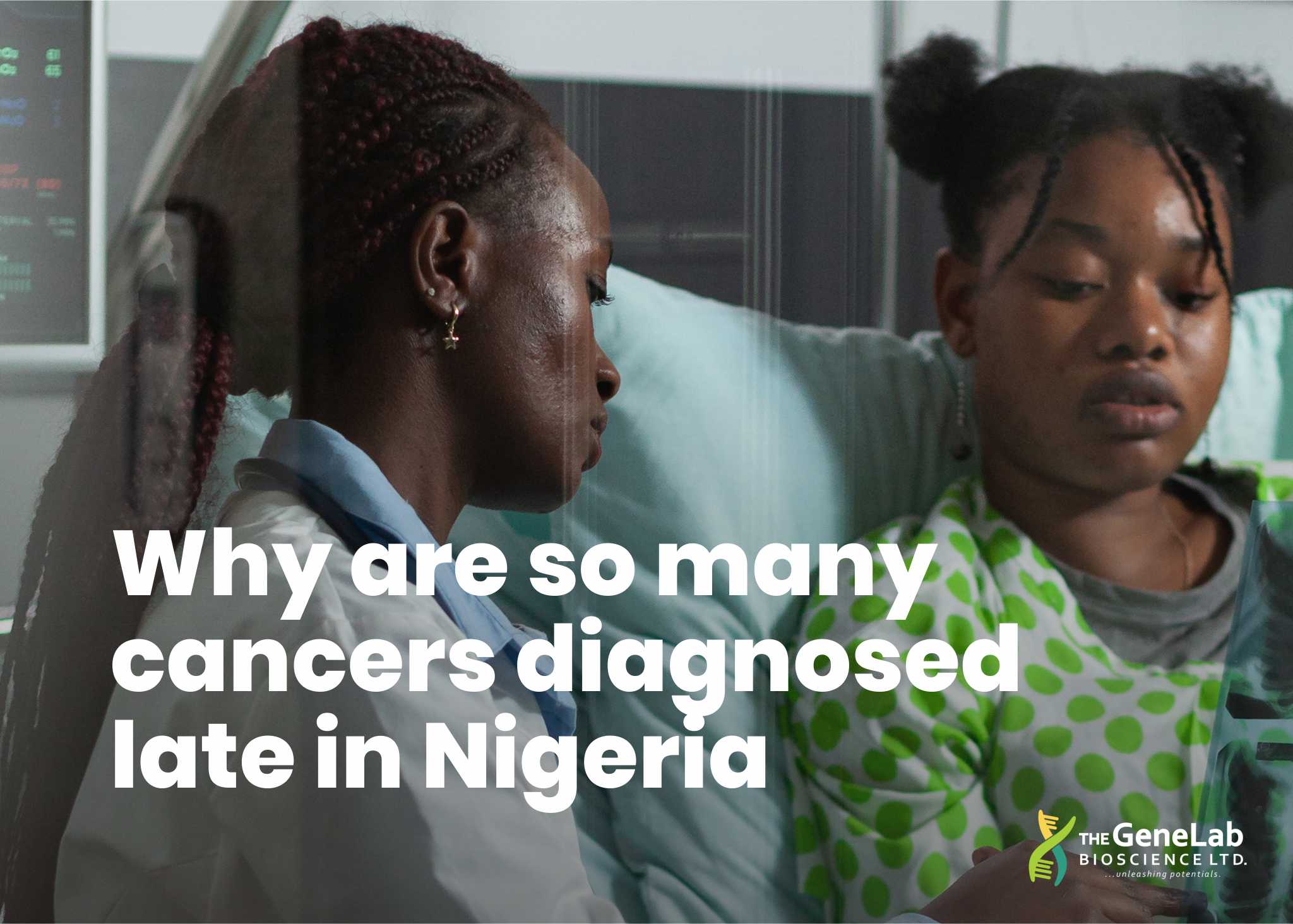
- At The GeneLab Bioscience, the aim is to help shorten the distance between “something is wrong” and “we know exactly what it is.”
In 2024, the International Agency for Research on Cancer (IARC) recorded an estimated 152,261 new cancer cases and 90,795 deaths from cancer. Breast cancer was the most common cancer overall, followed by prostate and cervical cancer.
Why the delay? It is rarely due to one reason. Patients may postpone seeking care, while others face delays within the healthcare system, moving between facilities, undergoing repeated evaluations or waiting for the investigations needed to establish a diagnosis. In the Nigerian study, patients visited a median of three facilities before receiving a formal hospital diagnosis and more than half of the diagnostic delay occurred after they had already entered the healthcare system.
The problem is not simply that patients wait too long. Delays can occur at multiple points, from recognizing symptoms and accessing healthcare to obtaining the right diagnostic tests, receiving results and accessing specialist care.
The question is: why?
1. Symptoms are ignored or misunderstood
A painless breast lump may be attributed to hormonal changes. Persistent bleeding may be considered normal menstrual flow. Weight loss may be blamed on stress.
2. Cost can turn a medical problem into a financial crisis
A cancer diagnosis is not a single test. It may require consultation, imaging, biopsy, histopathology, immunohistochemistry, additional laboratory tests and specialist review.
3. The diagnostic pathway can be fragmented
Even after someone reaches a hospital, the journey may continue through several facilities. A patient might see a general practitioner, then a specialist, search for a laboratory and finally return to another hospital with the result. Every handoff creates another opportunity for delay.
This is why improving cancer outcomes is not only about detecting cancer early. It is also about making the pathway from suspicion → testing → diagnosis → treatment faster and more coordinated.
What late diagnosis can look like
Scenario 1: The “small lump”
A woman notices a painless breast lump. Because it does not hurt, she waits. Months later, the lump enlarges and she seeks care. Imaging and biopsy eventually confirm cancer. What began as a symptom that could have been invested has now become a much more complicated clinical problem.
Scenario 2: The “treatment carousel”
A man in his 60s develops frequent urination, a weak urine stream and difficulty starting urination. He is repeatedly treated for urinary symptoms or an enlarged prostate, with symptoms improving temporarily before returning. Eventually, he sees a specialist, where a PSA test and further investigations raise suspicion of prostate cancer, which is confirmed by biopsy.
Scenario 3: The “biopsy that becomes a bottleneck”
A doctor suspects cancer and recommends a biopsy. The patient struggles to find an affordable facility, delays the procedure, then waits for the report before returning to the specialist. The biological disease has not stopped progressing while the healthcare pathway catches up.
Where we come in
At The GeneLab Bioscience, the aim is to help shorten the distance between “something is wrong” and “we know exactly what it is.” Early diagnosis is not only a hospital problem. It is a laboratory, education and healthcare system challenge and laboratories can be part of the solution.
The goal should not simply be to diagnose more cancer. It should be to diagnose cancer earlier and accurately, with the right information to guide the next clinical decision. That is where science becomes service and where The GeneLab Bioscience can help move Nigeria’s cancer story from late detection to earlier action.
A delay at any stage can delay treatment. The GeneLab Bioscience can contribute to this pathway through accessible, quality-focused diagnostic testing, molecular diagnostics, cancer-related biomarker testing and advanced genomic capabilities, while working alongside clinicians and healthcare institutions.
Need a laboratory test or want to know which diagnostic investigation is appropriate for your situation?
Speak with a qualified healthcare professional and contact The GeneLab Bioscience to confirm available
testing, sample requirements and next steps.
References: