


Advancing genomics in Africa requires more than access to technology. It requires practical skills, scientific expertise and the ability to translate genomic data into meaningful research outcomes.
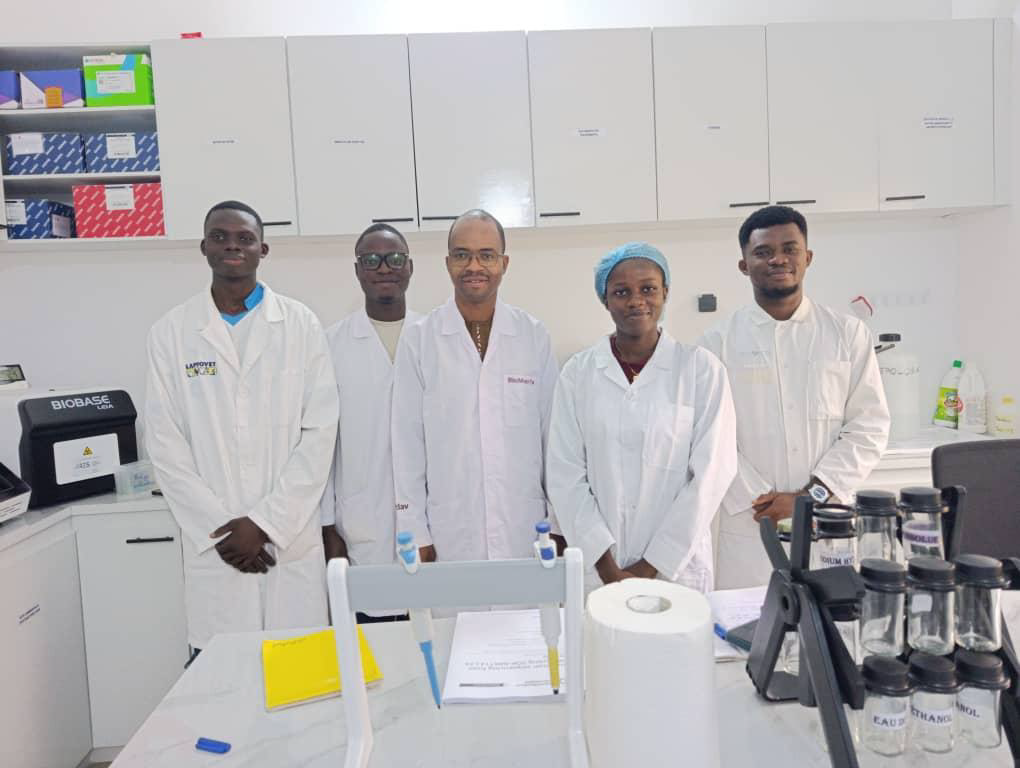
Our team travelled to Abomey-Calavi, Benin, to deliver a three-day, hands-on training programme for scientists at a research unit studying transmissible diseases. The laboratory had acquired an Oxford Nanopore MinION Mk1D, a compact sequencing instrument designed to generate DNA sequence data in real time.
Our mission was to help the scientists understand how to use it effectively, from sample preparation to data analysis.
Nanopore Sequencing Principles and Workflow.
The training began with an introduction to the principles of nanopore sequencing and its applications in modern molecular biology.
Nanopore sequencing works by measuring changes in electrical current as a DNA or RNA molecule passes through a protein pore. These changes produce characteristic signals known as squiggles, which are converted into nucleotide sequences through a process called basecalling. Unlike many conventional sequencing technologies, nanopore sequencing can generate data in real time and produce long reads, making it useful for whole-genome sequencing, RNA sequencing and metagenomics.
Participants learnt about the evolution of DNA sequencing, the differences between short-read and long-read sequencing technologies, Oxford Nanopore’s Technologies’ sequencing platforms, flow cell handling and the complete sequencing workflow. They were also introduced to MinKNOW, the software used to configure and monitor sequencing runs.
Practical sessions covered proper pipetting techniques, common errors that can compromise library preparation, and best practices for preventing contamination throughout the sequencing workflow.
Building Strong Foundations at the Laboratory Bench.
Participants learned how DNA concentration, purity can affect library preparation, read length and sequencing yield. We compared Qubit fluorometric quantification with NanoDrop spectrophotometry and discussed common DNA extraction challenges that can compromise downstream sequencing results.
We also introduced library preparation principles. Using the Rapid Barcoding Kit, participants explored how DNA can be prepared and barcoded for multiplex sequencing. These sessions reinforced an essential principle: reliable sequencing begins with high-quality sample preparation and careful laboratory practice.
A Practical Laboratory Session.
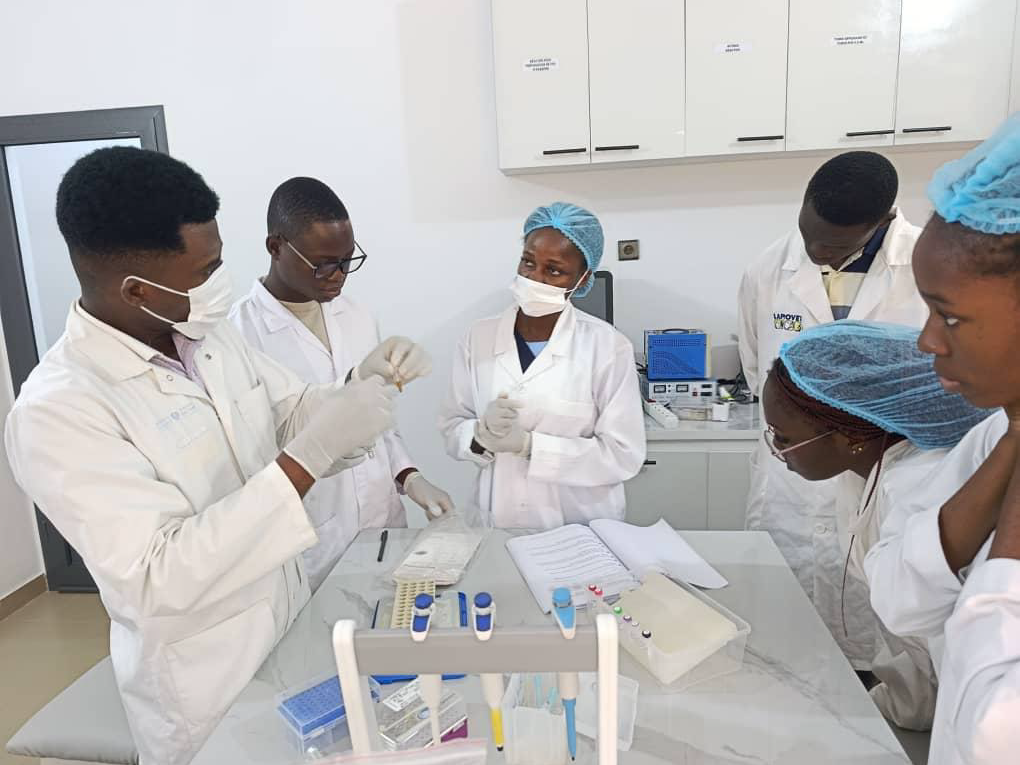
The scientists moved from theory to practice by preparing barcoded libraries from their own metagenomic samples under supervision.
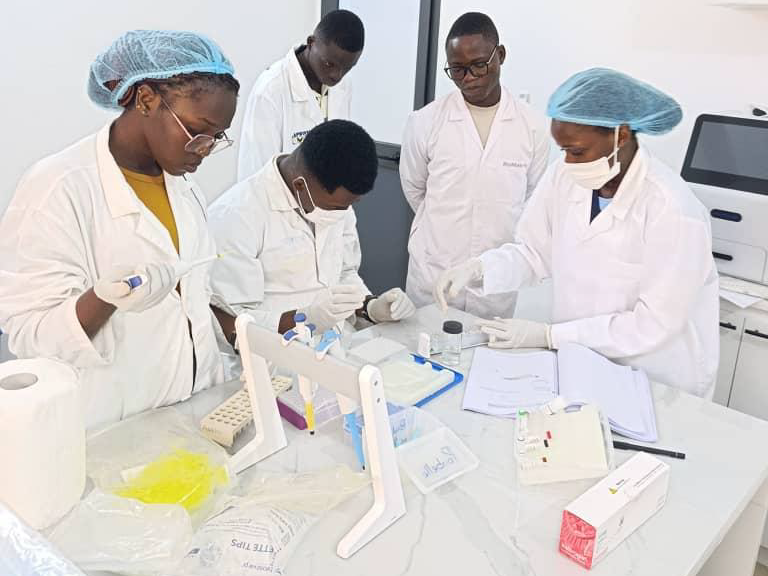
The hands-on sessions focused on accurate pipetting, contamination prevention and critical procedural steps that can affect library quality. Participants also observed the importance of proper flow cell priming and careful sample loading. With the libraries prepared, the team used MinKNOW to configure the experiment and initiate the sequencing run.
The practical exercise demonstrated how portable sequencing technology can bring genomic data generation closer to laboratories and researchers.
Turning Sequencing Data into Biological Insights.
The final day focused on understanding and processing the data generated during sequencing.
We also demonstrated EPI2ME as an accessible entry point for bioinformatics analysis. Together, we reviewed key sequencing performance indicators, including active pores, total yield, read length, quality scores and barcode distribution.
Strengthening Genomic Research Capacity in Africa.
This training represented more than an introduction to a new instrument. It was an investment in local scientific expertise and the development of genomic research capacity in West Africa.
Portable sequencing technologies can help researchers investigate pathogens, study genetic diversity and strengthen disease surveillance closer to where samples are collected. Realizing these benefits, however, requires trained personnel, reliable laboratory workflows, quality control and appropriate bioinformatics support.
At The GeneLab Bioscience, we equip scientists with the knowledge and practical skills to make the most of modern bioscience technologies.
We are proud to have supported these scientists in Benin as they took an important step towards integrating real-time sequencing into their research. Genomic capacity in West Africa has too often meant sending samples overseas. Portable sequencing changes that. Outbreaks can be investigated, pathogens tracked and research questions answered close to where samples are collected. Training is the bridge between owning a sequencer and using it with confidence.
Looking to strengthen your genomics research?
The GeneLab Bioscience provides Next Generation Sequencing Devices, hands-on sequencing training, laboratory workflow solutions and bioinformatics services.
For more enquiries about our services, contact us today.