



Did you know breast cancer can affect both women and men?
Some breast cancer lumps have characteristics that may raise concern, including:
- Hard or firm texture: A lump may feel unusually firm compared with the surrounding tissue.
- Irregular shape: It may not be round or smooth; instead, it could feel uneven or jagged. It’s important to know your ‘normal’ breasts or chest shape to help monitor irregular changes.
- Fixed in place: A lump that does not move easily beneath the skin when touched.
- Painless: Many breast cancer lumps do not hurt but the absence of pain does not mean a lump is harmless.
- Persistent or growing: A lump that remains, increases in size or changes over time.
Breast Cancer Awareness: How to Examine Your Breasts and How Often to Check.
Step-by-Step Guide: How to Check Your Breasts for Lumps.
- Step 1: Stand in front of a mirror: Stand with your arms by your sides. Look for changes in breast size, shape, skin texture or colour.
- Step 2: Raise your arms: Lift both arms above your head and check for dimpling, swelling or changes in your breasts or nipples.
- Step 3: Feel your breasts: Using the pads of your fingers, gently feel each breast in small circular motions. Cover the entire breast, including the area near your armpit.
- Step 4: Check your nipples: Look for new inversion, unusual discharge, sores or other changes.
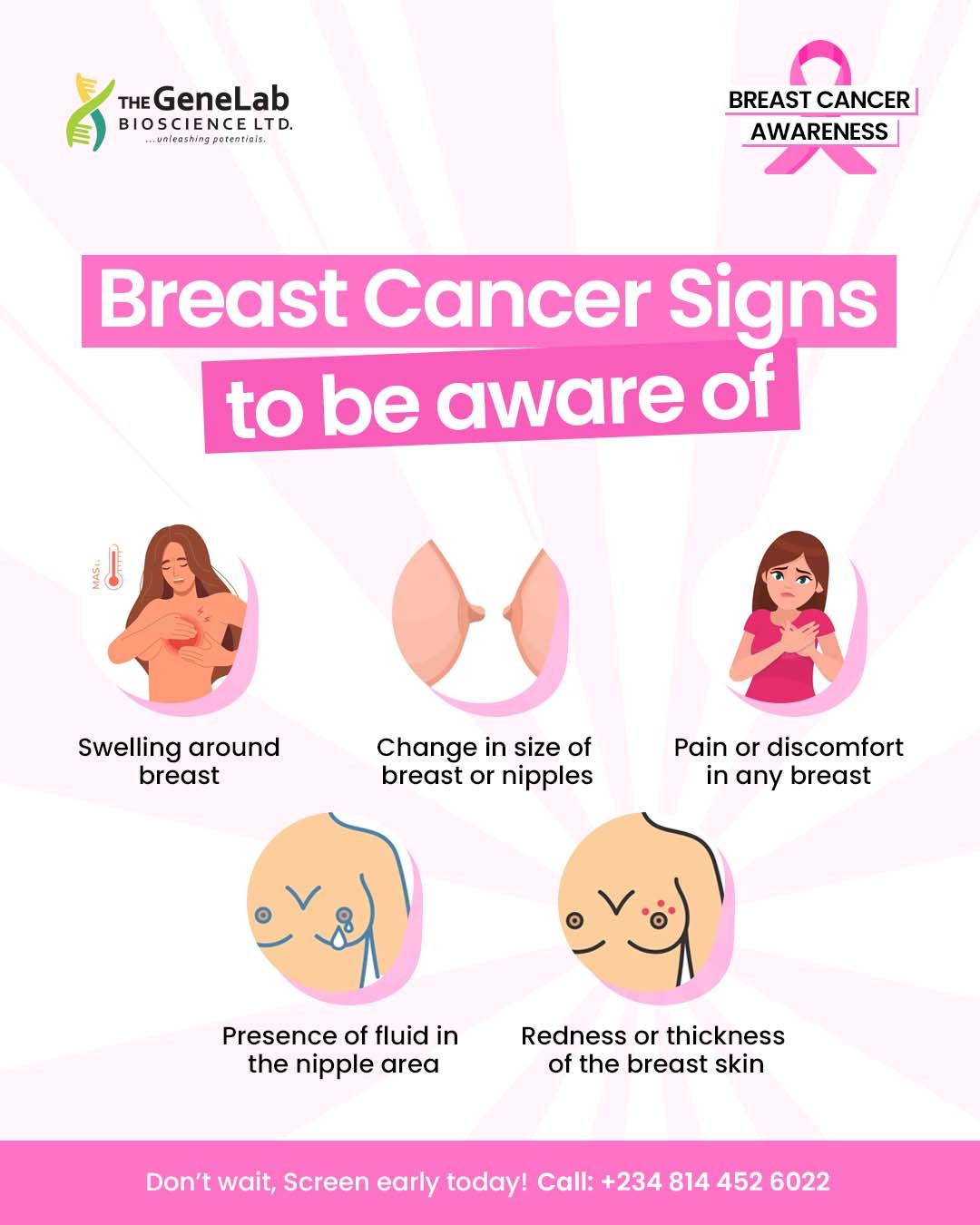
- Step 5: Know what to look out for: Pay attention to new lumps, thickening, skin dimpling, persistent swelling or other unusual changes.
Can Men Get Breast Cancer?
Yes. Men have breast tissue and can develop breast cancer, although it is much less common than in women. What should you look out for? A lump under or near the nipple, a nipple that changes shape or turns inward, redness or dimpling of the skin or swelling around the breast or armpit.
A Man’s Journey With Breast Cancer: One Family’s Experience.
Gold Amopho, from Kaduna State, shares her husband’s experience after he was diagnosed with male breast cancer in October 2024. The lump first appeared about three years earlier as a pimple-like spot near his nipple. Initially, he thought it was harmless and was unaware that men could develop breast cancer. Over time, the lump grew larger and the surrounding skin changed colour. Concerned by these changes, Amopho sought advice from a nurse friend, who encouraged them to consult an oncologist. Further investigations confirmed the diagnosis and the couple underwent treatment.
This experience shows why men should not dismiss unusual breast or chest changes simply because breast cancer is uncommon in males
What If the Lump Is Not Cancer?
Many breast lumps are benign, meaning they are not cancerous. Common causes include fibroadenomas, breast cysts, hormonal changes, fat necrosis and inflammation. Men may also develop gynecomastia, which causes enlargement or tenderness of breast tissue. However, it is important to have any unusual breast lump evaluated by a healthcare professional to determine its cause and ensure appropriate management.
How Is Breast Cancer Diagnosed?
Investigations depend on the patient’s age, symptoms, medical history and clinical examination findings.
- Histopathology and biomarker testing: Examines tissue to determine whether cancer is present. For confirmed breast cancer, oestrogen receptor, progesterone receptor and HER2 testing may help guide treatment decisions.
- Clinical examination: A healthcare professional examines the breast and surrounding areas.
- Breast imaging: An ultrasound, diagnostic mammogram or both may be recommended.
- Biopsy: If a suspicious area is identified, a tissue sample may be collected for laboratory analysis.
The GeneLab Bioscience: Advancing Molecular Diagnostics for Better-Informed Cancer Care.
As an advanced Molecular Diagnostics center, we work with healthcare professionals through appropriate laboratory investigations.
Our breast cancer diagnostic services include:
- BRCA1 and BRCA2 testing: Identifying relevant inherited germline or tumour-associated somatic genetic variants.
- Next-generation sequencing: Analysing multiple cancer-associated genes simultaneously to identify genetic variants that may help inform clinical assessment and treatment decisions.
- Precision medicine support: Providing molecular findings that clinicians can interpret alongside pathology results and clinical information when evaluating relevant treatment options.
- Breast Cancer Marker Panel: Assessing key biomarkers, to help characterise breast cancer and guide treatment selection and patient management.
Found a Breast Lump? What Should You Do? Remember: Don’t panic. Don’t ignore it. Get it checked.
A lump does not automatically mean cancer but waiting for it to hurt or grow is not advisable. This applies to men as well as women. Need more information about breast cancer testing? Contact The GeneLab Bioscience to enquire about available diagnostic and molecular laboratory services and testing requirements.