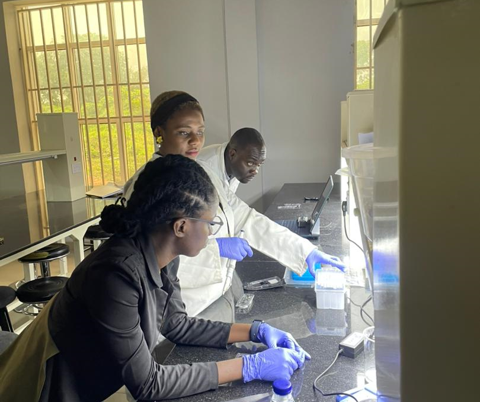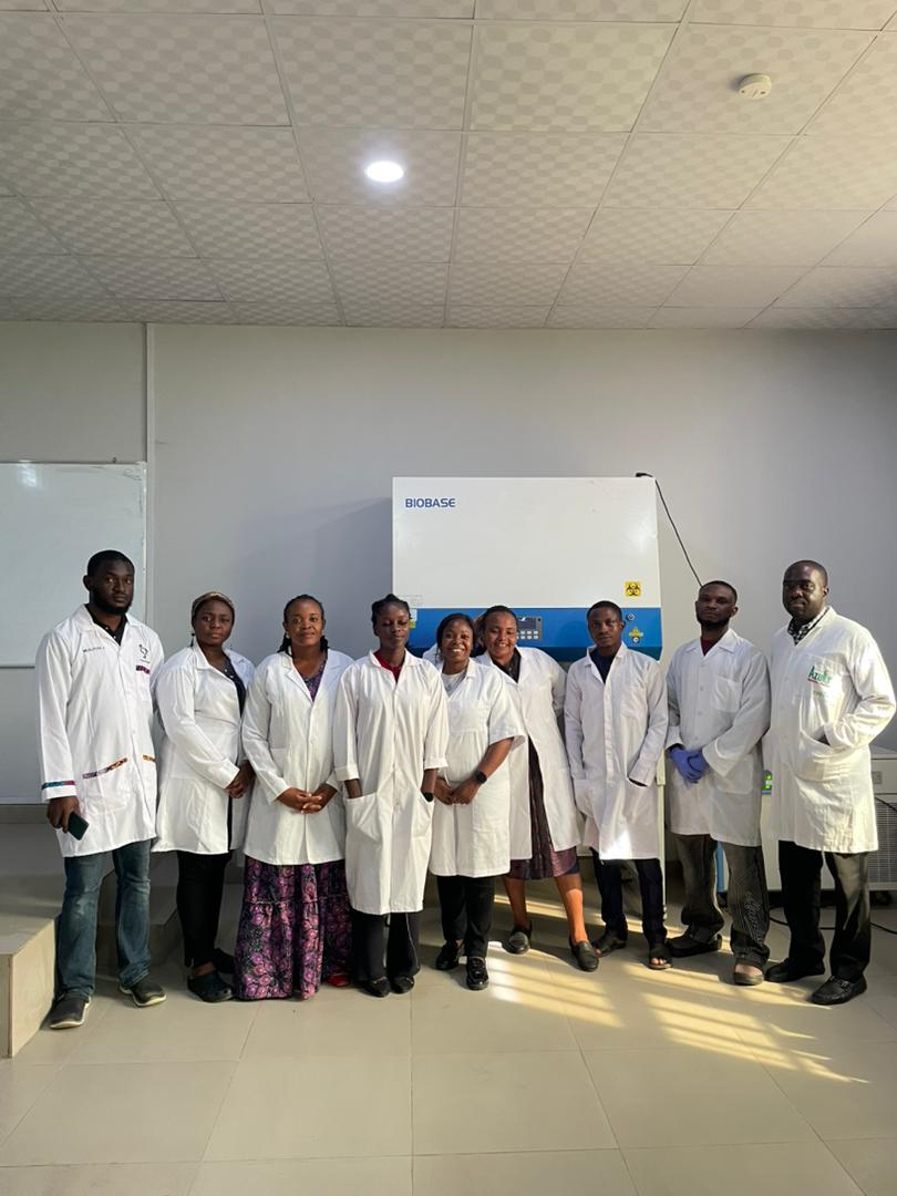
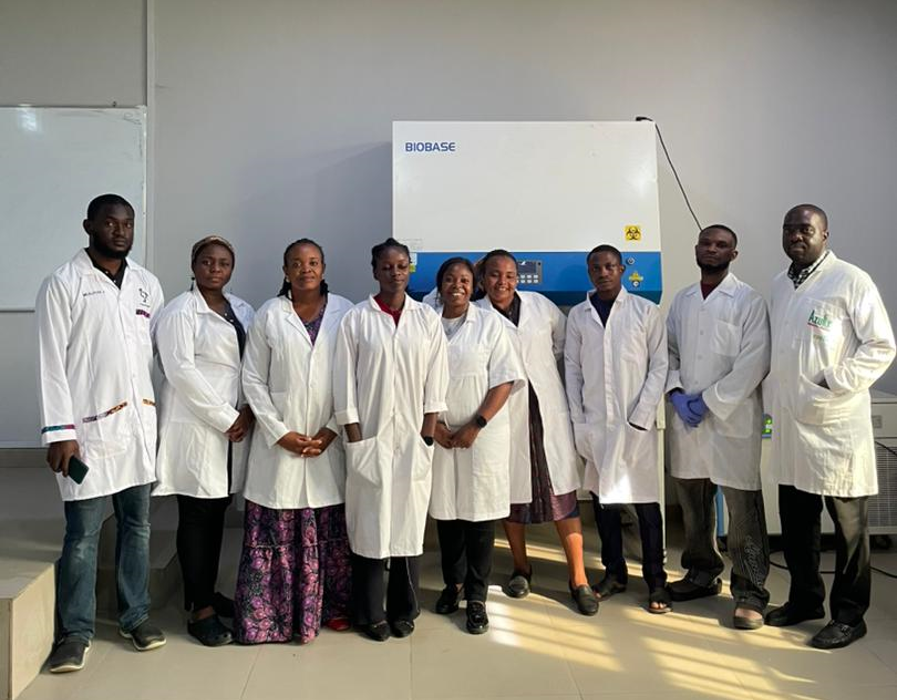
Our team participated in a specialized sequencing training programme focused on HIV drug resistance sequencing using different sequencing platforms, held at the NCDC National Reference Laboratory in Abuja. The training was supported by the U.S. Centers for Disease Control and Prevention (US CDC) and the Nigeria Centre for Disease Control and Prevention (NCDC).
Introduction to Oxford Nanopore Sequencing.
The ONT training sessions focused on the theoretical foundations of nanopore sequencing, giving participants an understanding of the technology and the processes required to generate high-quality sequencing data. Led by Esther Amoo, the opening session introduced participants to the fundamentals of Oxford Nanopore sequencing. Participants were introduced to key applications of nanopore technology, including:
- Whole-genome sequencing
- Targeted sequencing
- Metagenomics
- Transcriptomics
Understanding the Complete ONT Workflow.
Participants were taken through the major stages involved in generating sequencing data, from sample preparation and DNA extraction to quality assessment, library preparation, sequencing, basecalling and downstream data analysis. Particular attention was given to the importance of each stage and how each stage of the workflow can influence sequencing performance and data quality.
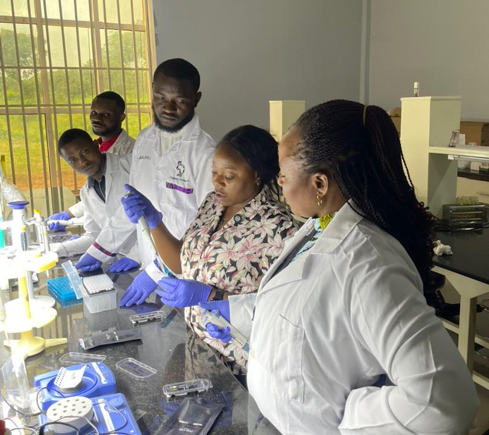
DNA Quality and Library Preparation.
The following sessions focused on two critical components of successful sequencing: DNA quality and library preparation. Participants learned about DNA integrity, purity, concentration and quality assessment methods. The discussion also highlighted common causes of poor sequencing performance and explained why proper sample quality control is essential before proceeding to library preparation. This theoretical foundation prepared participants for the hands-on laboratory sessions that followed.
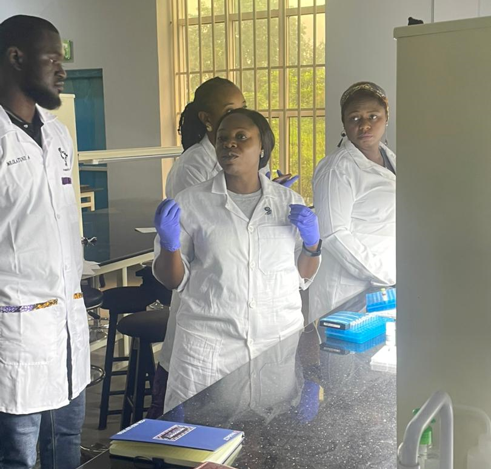
From Theory to Practice.
The practical sessions were jointly facilitated by the trainers and covered key stages of the sequencing workflow. Participants carried out DNA quantification, barcode attachment, sample pooling, and preparation of the final sequencing library using the Oxford Nanopore Rapid Barcoding Kit with Lambda DNA. Participants were then guided through the preparation and loading of the flow cell.
Introduction to Basecalling and Data Analysis.
Generating sequencing data is only one part of the genomics workflow. Understanding how that data is processed and interpreted is equally important. Participants were introduced to the bioinformatics workflow and the expected sequencing outputs.
Assessing Sequencing Performance and Troubleshooting.
The technical sessions concluded with a review of sequencing quality metrics and troubleshooting approaches. The session also explored common laboratory and sequencing challenges and practical approaches for identifying and resolving issues that may affect sequencing performance.
Looking Ahead.
Our participation in this training reflects our commitment to supporting laboratories and researchers as they explore and adopt modern sequencing technologies. The combination of theoretical learning and practical laboratory experience provided a strong foundation for participants to begin working with Oxford Nanopore sequencing. As genomics continues to play an increasingly important role in infectious disease surveillance, research, diagnostics, and public health, building local expertise will remain essential.
Ready to Strengthen Your Genomics Workflow?
Whether you are setting up a small research laboratory, expanding an established genomics facility, or exploring sequencing technologies for your research programme, Contact The Genelab Bioscience Limited today to explore sequencing solutions and capacity building.