


What if we could read the DNA of tuberculosis to predict if standard drugs will work before treatment even begins?
Tuberculosis Burden in Nigeria.
The Commissioner for Health, Dr. Abubakar Labaran Yusuf, stated that “tuberculosis remains a major public health concern globally and locally.” The Kano State Government reported treating 28,169 tuberculosis (TB) patients in 2024, the highest number recorded by any state in the country, out of 33,961 cases documented within the year.
Capacity Building in The Genelab Bioscience.
The GeneLab Bioscience is proud to contribute to capacity building by providing training in areas such as:
- Molecular diagnostics research
- Infectious disease research
- Bioinformatics capacity building
- Whole genome sequencing
- Viral Metagenomics
- RNA/DNA extraction
- Library preparation and more.
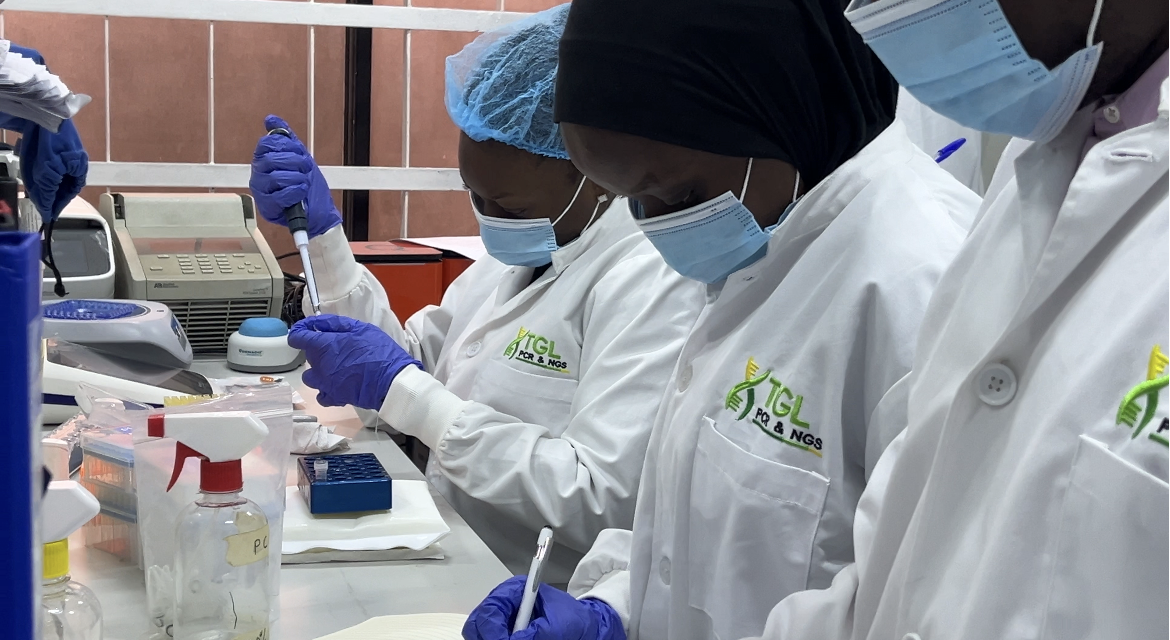
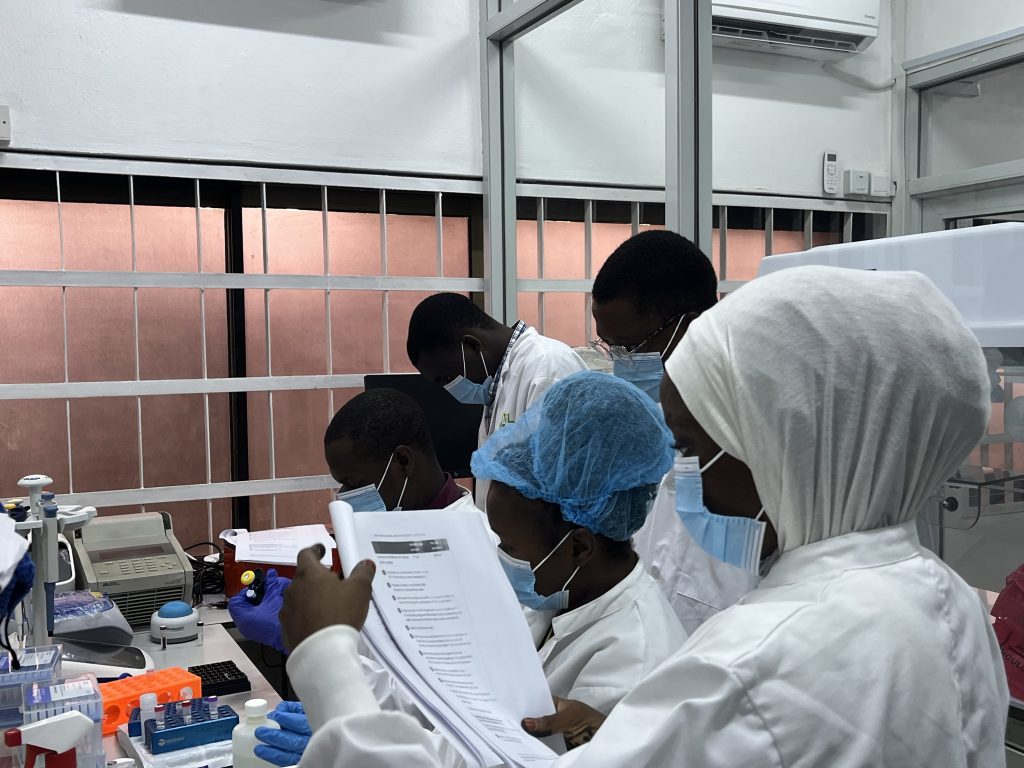
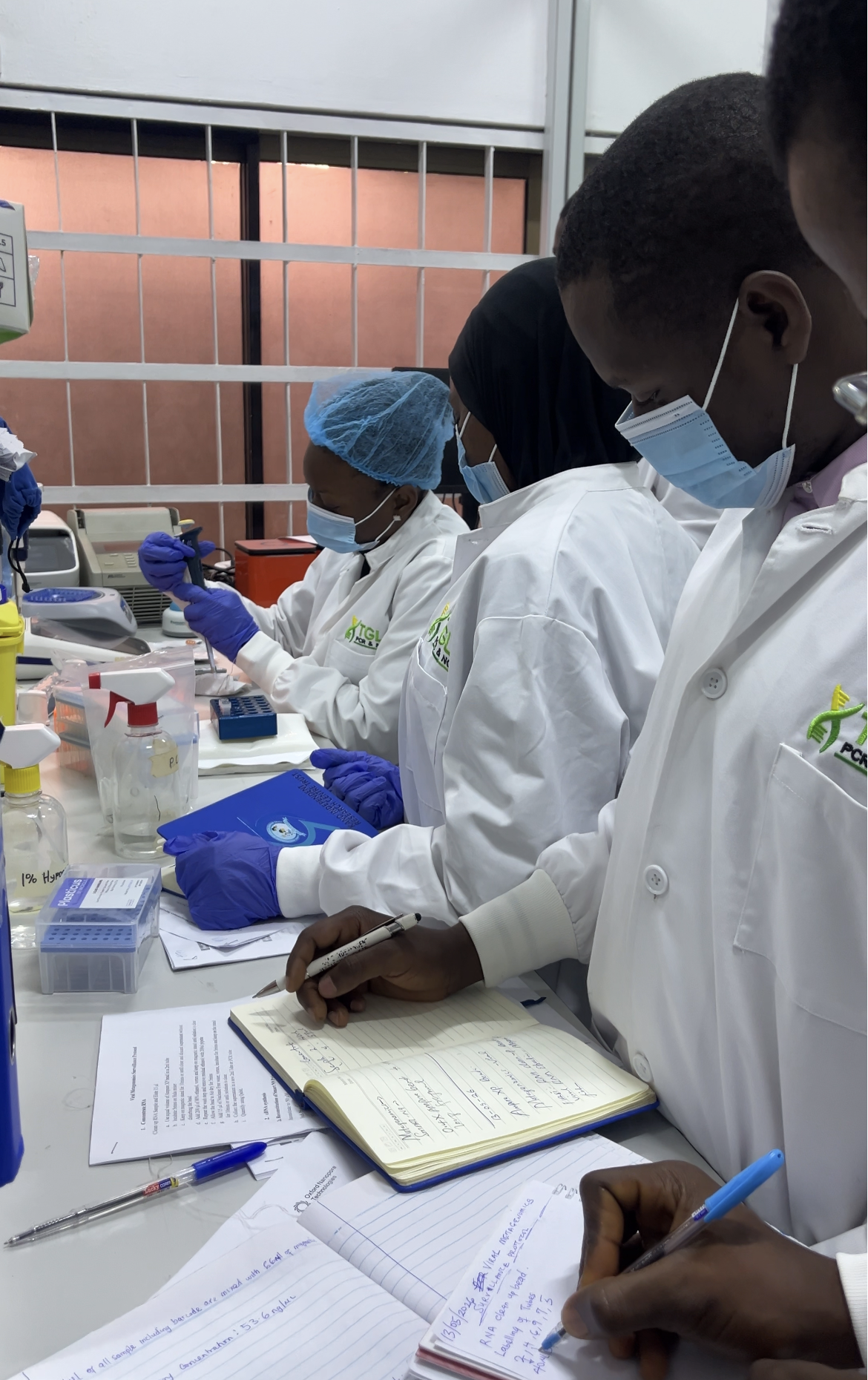
A few days ago, we held a 5-day intensive hands-on training on Oxford Nanopore Technology ONT for whole genome sequencing and viral metagenomics.
The Power of DNA and Sequencing Technology.
Genomics is the study of all of a person’s genes, how the genes interact with each other and the environment. Every organism is made up of DNA “nucleotides” which are the molecular component that help determine how the organism functions, evolves and responds to its environment.
Long-read sequencing technology such as ONT has improved the landscape of infectious disease diagnostics by offering a range of benefits that traditional methods could not achieve. The traditional diagnostic methods relied on culturing organisms in the laboratory or testing for a few known pathogens at a time, which could be slow and time consuming. Sequencing technology introduced benefits such as: quick identification of pathogens, detection of drug resistant mutations, tracking the transmission routes in real-time leading to afaster public health response and precision treatment.
Genes Involved in Mycobacterium tuberculosis Drug Resistance.
Tuberculosis sequencing focuses on reading the DNA of Mycobacterium tuberculosis to identify mutations linked to drug resistance. This is important because TB treatment relies on major drugs such as:
- Rifampicin
- Isoniazid
- Pyrazinamide
- Ethambutol
There are different genes involved in TB drug resistance but one of the most important genes is the rpoB gene that acts as the binding site for rifampicin. Rifampicin is used because it is one of the primary first-line antibiotics that directly targets Mycobacterium tuberculosis, which is the bacterium that causes TB. Under normal conditions, rifampicin binds to the bacterium and stops its growth, thereby treating the disease. Mutations in the rpoB gene can alter the structure of the binding site, preventing the drug from working properly.
Hands-On TB Sequencing and EPI2ME Bioinformatics Result Analysis.
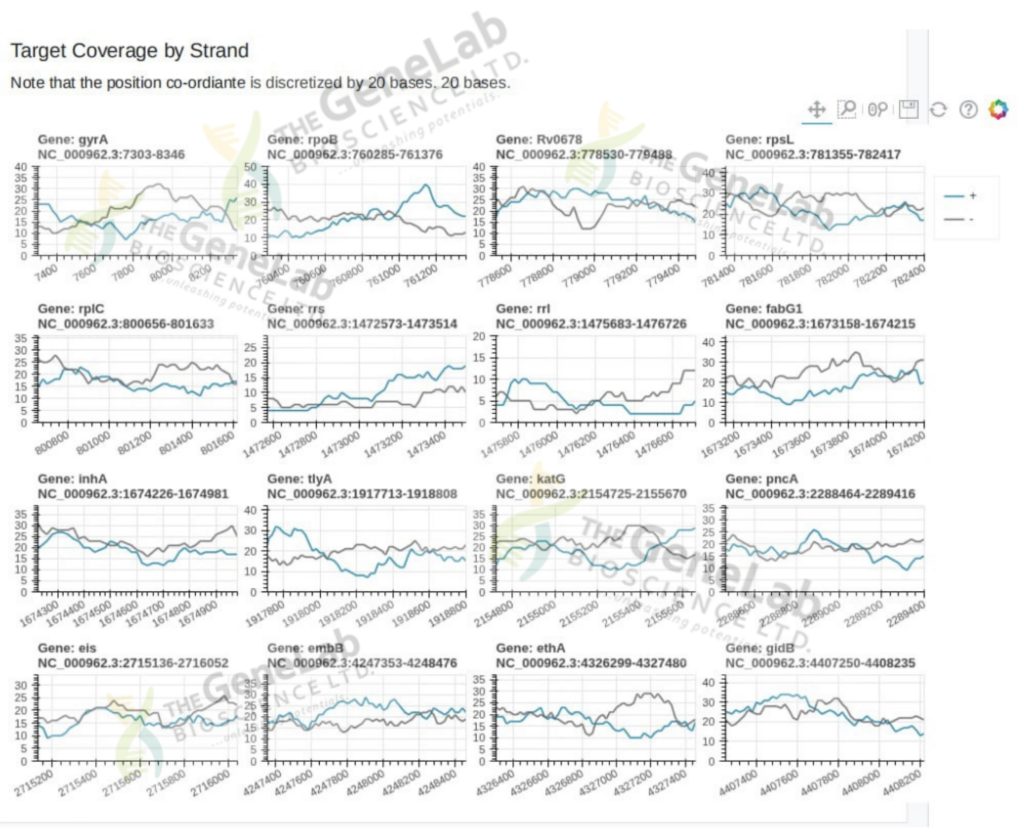
The sequencing results showed adequate target coverage across major TB resistance-associated genes on both forward and reverse DNA strands. Coverage depth remained relatively consistent across the analyzed regions; no major coverage dropouts were identified. The sequencing workflow and subsequent bioinformatics analysis (EPI2ME) evaluated approximately 16 resistance-associated genes such as: rpoB, katG, inhA, gyrA, rpsL, rrs, fabG1, tlyA and more. The analysis showed that there were no mutations in the resistance related genes, allowing standard TB drugs to bind and function effectively. In conclusion, the TB strain was drug susceptible, rather than drug resistant
Research Support and Collaboration Opportunities.
As a diagnostic research laboratory, we are equipped to support researchers, institutions, healthcare organizations and students with hands-on training. We provide the expertise and laboratory infrastructure needed to drive impactful scientific knowledge.
Interested in starting / developing your project, exploring a research collaboration? Contact The Genelab Bioscience today to learn more about our genomic sequencing services, training opportunities and research partnerships.
A very valuable demonstration of how sequencing can move TB diagnostics beyond simply identifying Mycobacterium tuberculosis toward understanding its resistance profile.
One point I find particularly important is that the absence of detected resistance-associated mutations should be interpreted alongside adequate coverage and the limitations of genotype-based prediction. For genes such as rpoB, katG, inhA, gyrA and rrs, the biological consequence depends on the specific variant, its established association with resistance, and the reliability of the sequencing/analysis pipeline.
This is where bioinformatics becomes more than simply generating a sequence: translating genomic variation into clinically meaningful resistance predictions requires careful QC, variant interpretation and, where appropriate, correlation with phenotypic susceptibility data.
The integration of ONT sequencing with workflows such as EPI2ME is particularly promising for strengthening rapid AMR surveillance and precision treatment strategies in Nigeria. It would be interesting to see this approach extended from individual isolates toward longitudinal and population-level genomic surveillance, where resistance patterns and transmission can be monitored together.