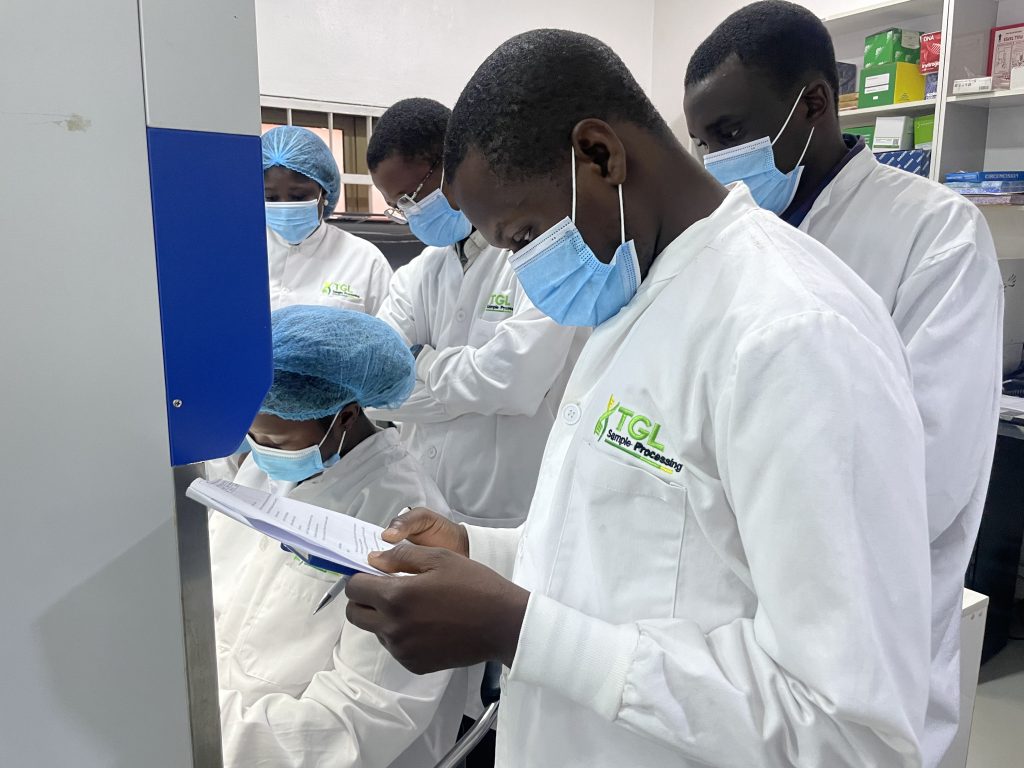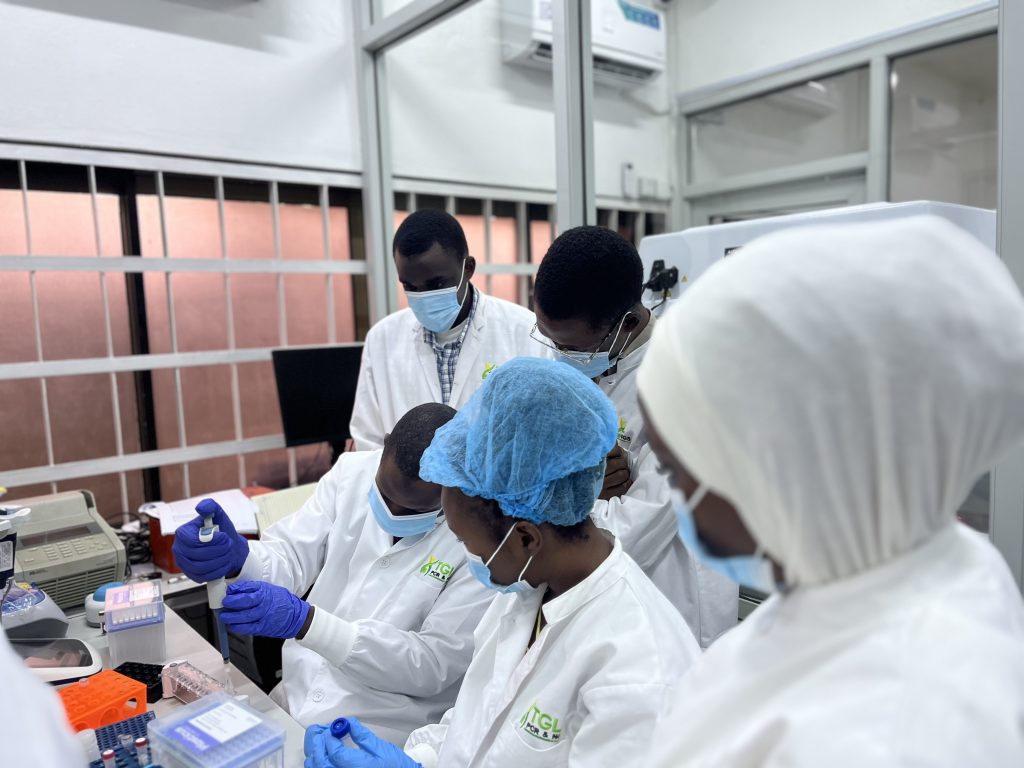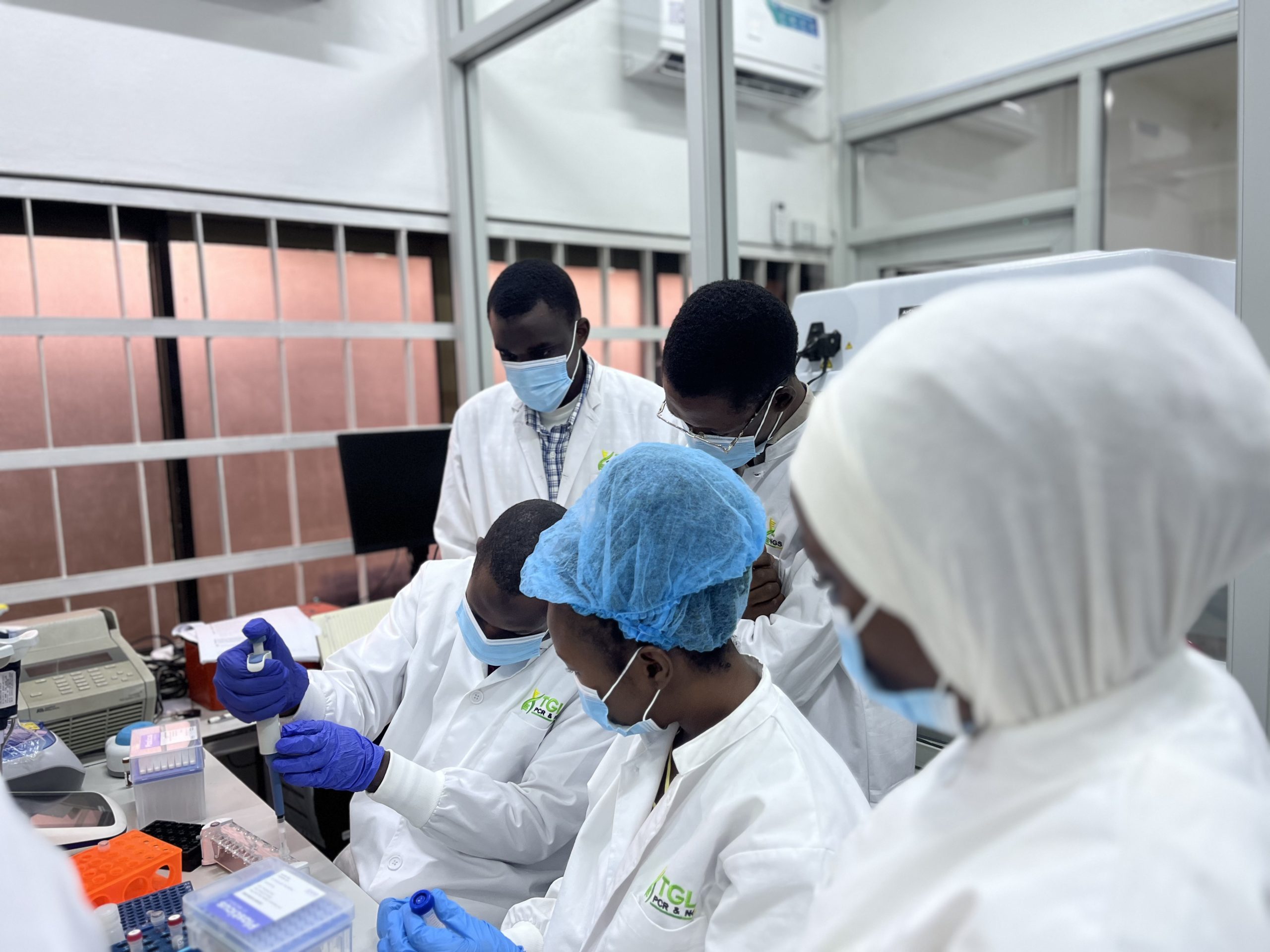
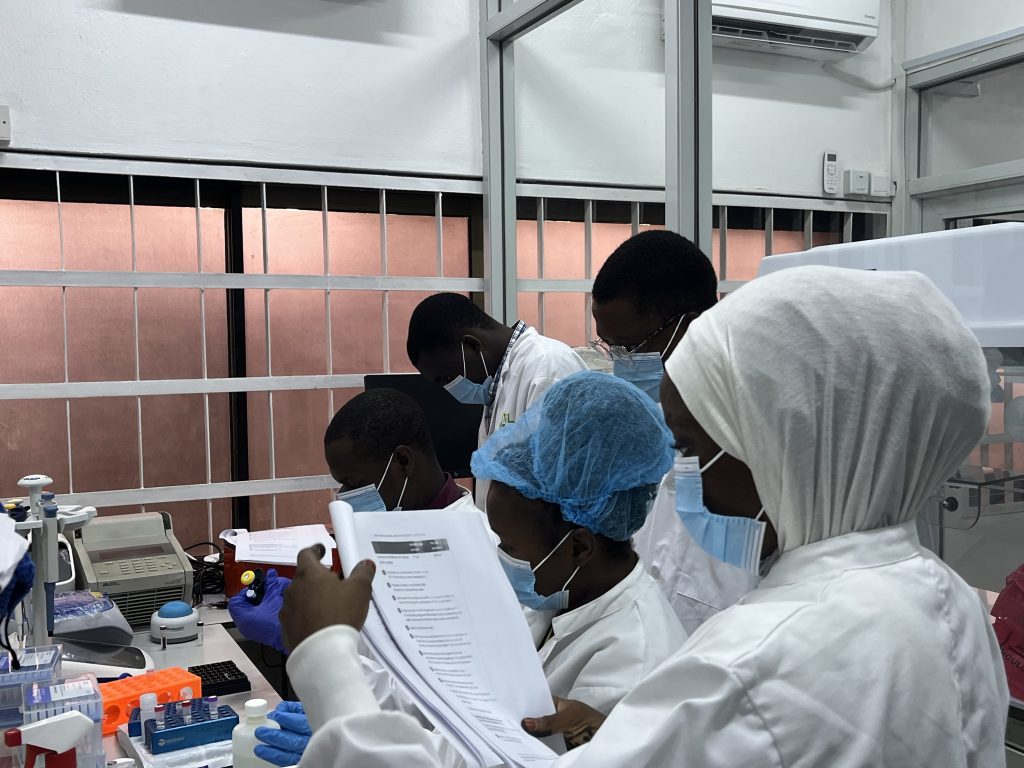
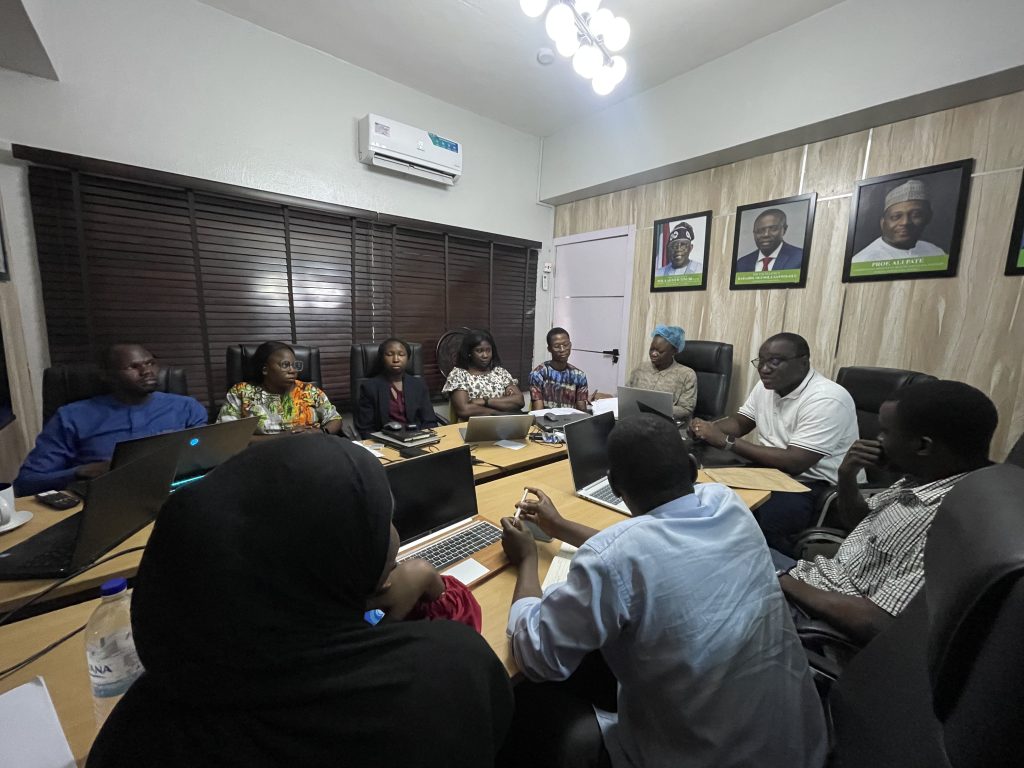
Capacity building efforts at The GeneLab Bioscience- an Advance Molecular Diagnostic Laboratory is pushing stronger proficiency in genomic and data driven scientific research. From May 11th – 15th 2026, The GeneLab Bioscience hosted an intensive five-day ONT training program for scientific researchers from the Kano Independent Research Centre Trust (KIRCT); a non-profit biomedical research institute sponsored by Pfizer Inc. for the people of Kano state and Nigeria to conduct Biomedical and Healthcare Research with a focus on communicable and non-communicable diseases of public health importance in Nigeria and the African continent.
This training focused on third-generation sequencing using Oxford Nanopore Technology (ONT) for Mycobacterium tuberculosis whole genome and viral metagenomics. Through hands-on analysis using EPI2ME, the program built practical competence in end-to-end workflows, ensuring participants can independently carry out sequencing, analyze data and interpret genomic result.
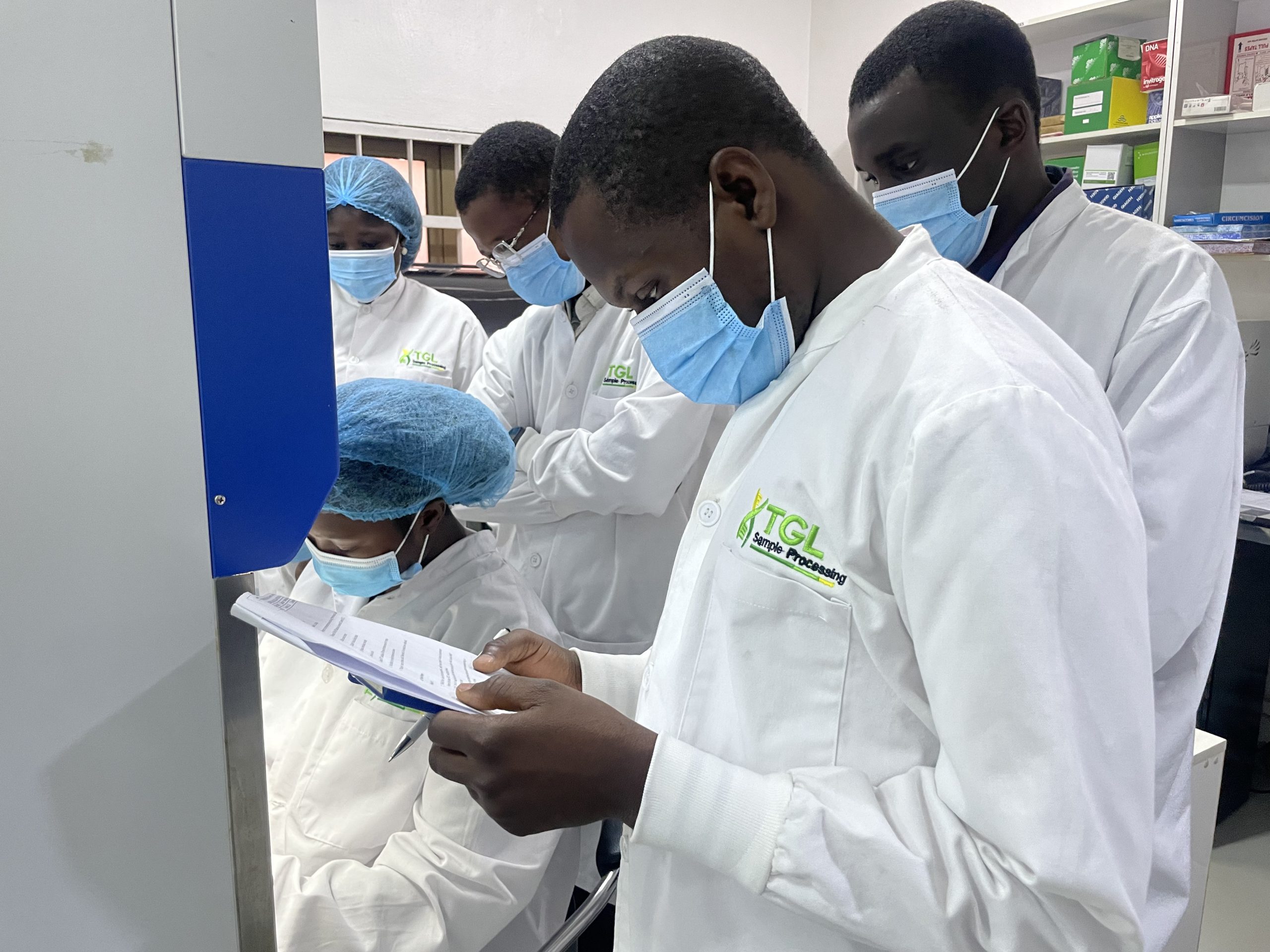
Training Days Highlight.
Day 1: Overview and Protocol Reviews.
The training began with laboratory safety protocols and pipetting techniques, which are fundamental skills in molecular biology.
Participants were then introduced to:
- ONT Sequencing Overview
- Quality control: Qubit quantification and Gel Electrophoresis
- Bacterial Whole Genome sequencing protocol review
- Hands-on Practical: Bacterial Whole Genome sequencing
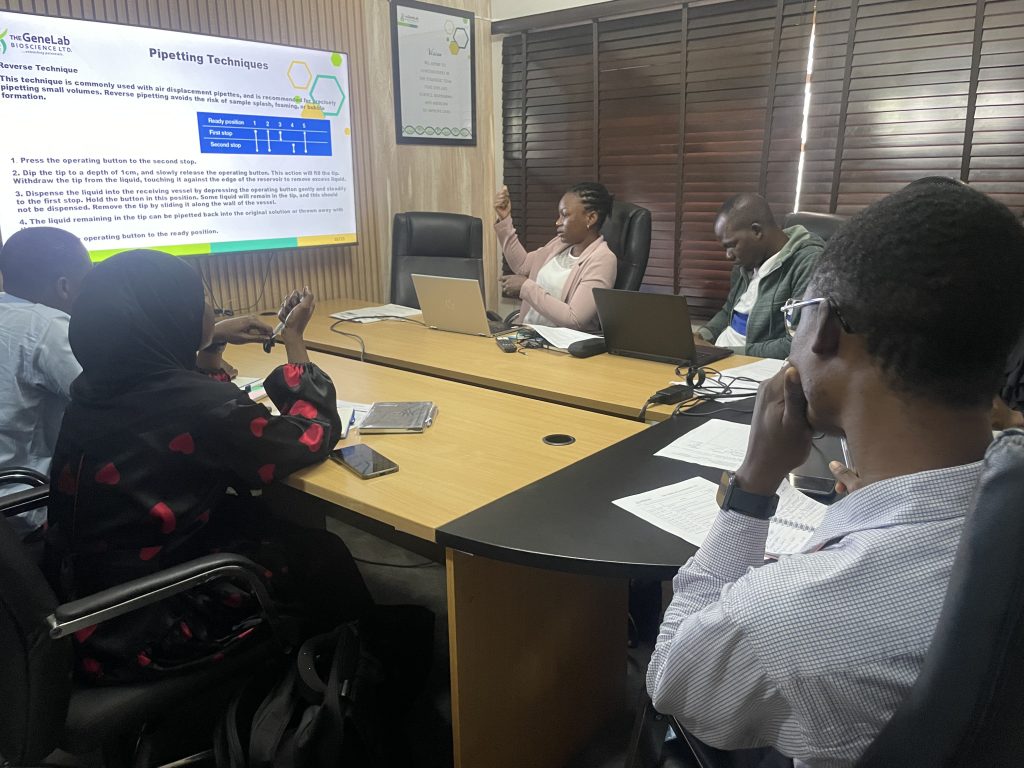
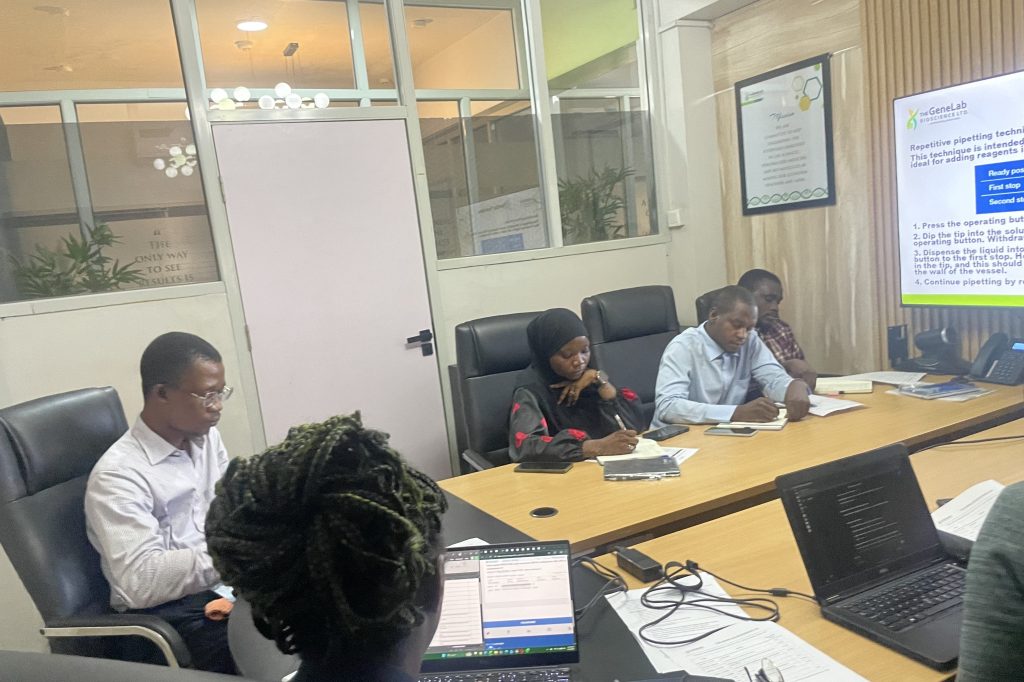
Day 2: Overview of Viral Metagenomics Protocols.
A review of Day 1 laboratory activities and EPI2ME result analysis was done, followed by sample and library preparation for Mycobacterium TB whole genome sequencing, flow cell loading and an overview of viral metagenomics protocols.
Day 3: Hands-on Viral Metagenomics and TB Workflow.
Participants were involved in sample preparation for viral metagenomics and performing agarose gel electrophoresis while concurrently washing the flow cell. They were guided through the analysis of Mycobacterium whole genome sequencing data for bacteria and fungi using EPI2ME, followed by a detailed review of the TB genome sequencing workflows.
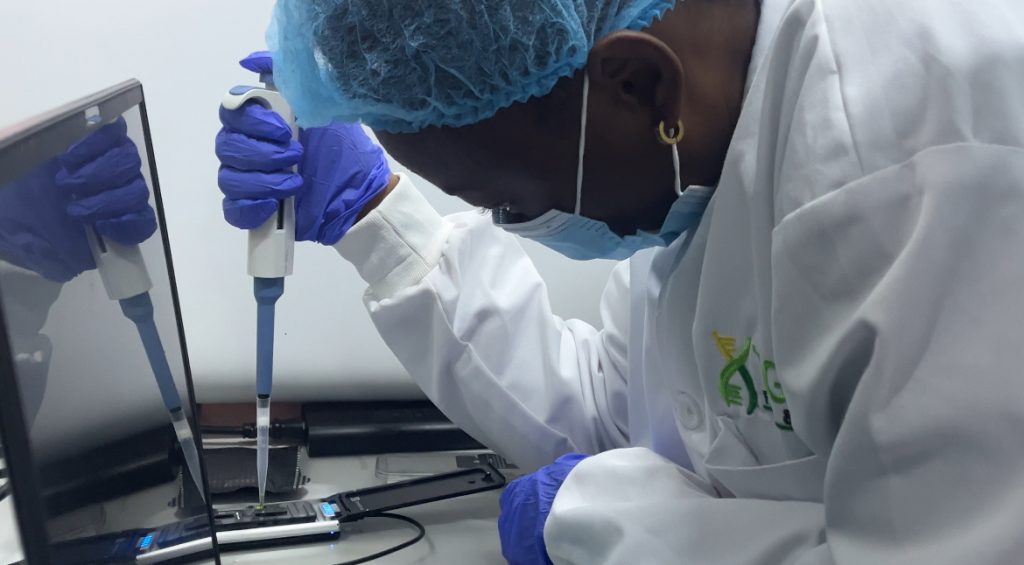
Day 4: The Analysis of Mycobacterium TB Sequencing Data using EPI2ME
The training session involved completing sample and library preparation for TB whole genome sequencing, loading and priming the flow cell and continuing the analysis of Mycobacterium TB sequencing data using EPI2ME.
Day 5: Review, Discussion and Certification
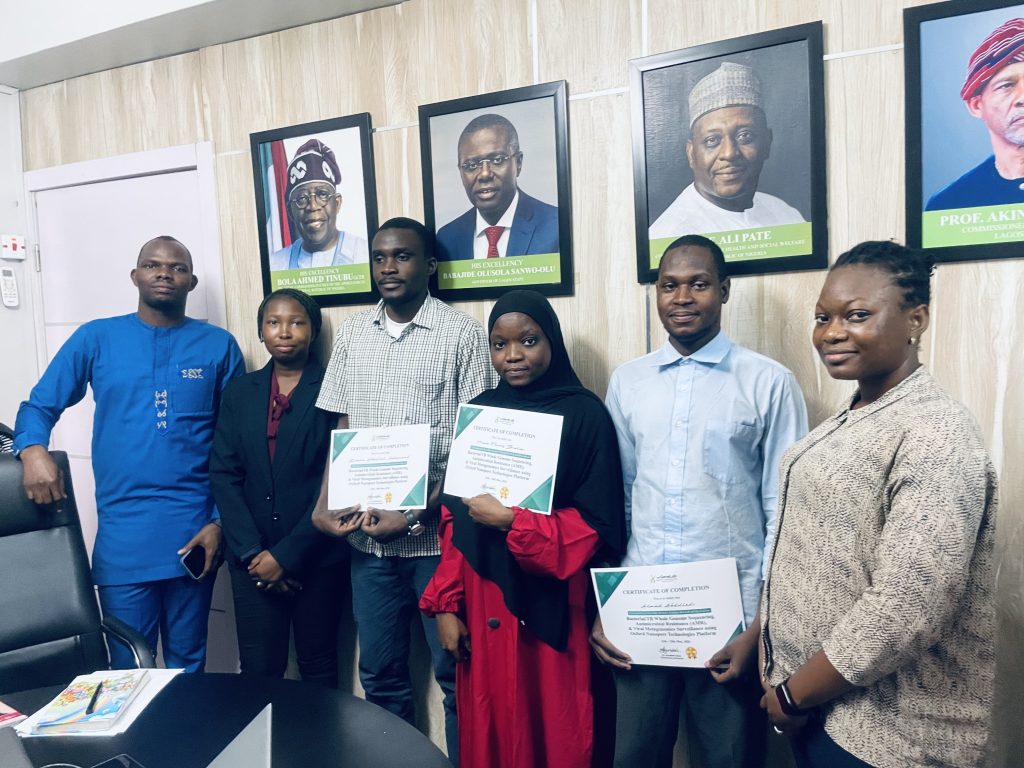
The training was concluded with a thorough wrap-up of laboratory activities, EPI2ME TB result and viral metagenomics analysis. This was followed by questions, discussions and feedback sessions. The program ended with closing remarks from the host; Dr. Ayorinde James, as he presented the certificates to participants in recognition of their successful completion of the intensive Hands-on training in Oxford Nanopore Technology (ONT) long-read sequencing for WGS and Viral Metagenomics.
Key Concept Taught During the Training.
One of the most interesting parts of the training focused on using DNA sequencing to study bacteria and understand why some infections become difficult to treat by using metagenomics and Oxford Nanopore Technology, hence the usage of TB, serving as one of the major hands-on training models….read more on the bioinformatics analysis
The participants began with Whole Genome Sequencing; as this reads all the DNA inside a bacterium, in simple explanation it’s almost like reading every single page of a book instead of just the title. By performing WGS, scientists can know exactly what organism they are dealing with and what hidden traits it carries.
Feedback From the Learners.
- Husna Farouq Ibrahim: This training has significantly expanded my technical expertise. While I was previously experienced in bacterial whole genome sequencing, I have now been exposed to advanced methodologies and strengthened my troubleshooting capabilities for addressing errors during sequencing workflows.
- Bashir Abdullah: I have gained training in troubleshooting during whole genome sequencing workflows and have acquired skills in data analysis for whole genome sequencing and viral metagenomics using EPI2ME.
- Ahmad Abdulhadi: I have developed a comprehensive understanding of the whole genome sequencing workflow and gained practical, hands-on experience in bacterial whole genome sequencing. I have also gained proficiency in flow cell washing after loading and further refined my pipetting skills.
We are committed to training more organizations and researchers with these advanced skills; contact us today to learn more about our training programs.