



Many men become so focused on achieving career goals, providing for their families and meeting daily responsibilities, that they overlook their own physical and mental well-being. Men are more frequently employed in demanding occupations with strenuous work activities that can have negative effects on one’s health, such as exposure to environmental hazards, workplace accidents and poor work conditions. These factors can lead to physical illness as well as mental strain (anxiety, stress and depression).
Given these risks, there is a need for regular preventive health screenings, early identification of health concerns and access to mental health support. June is recognized as Men’s Mental Health Awareness Month and Men’s Preventive Health Awareness Month, a time to emphasize the importance of prioritizing men’s health and encouraging them to seek the care and support they need.
The Hidden Risks Every Man Should Know
Some of the leading threats to men’s health are Colorectum cancer, prostate cancer and liver cancer. They can remain silent for years before noticeable symptoms appear, by the symptoms start, they might have progressed to an advanced stage, making treatment more difficult and increasing the risk of complications. This is why routine health screening is one of the most effective ways to protect long-term healthin the year.
Essential Test Screening For Men
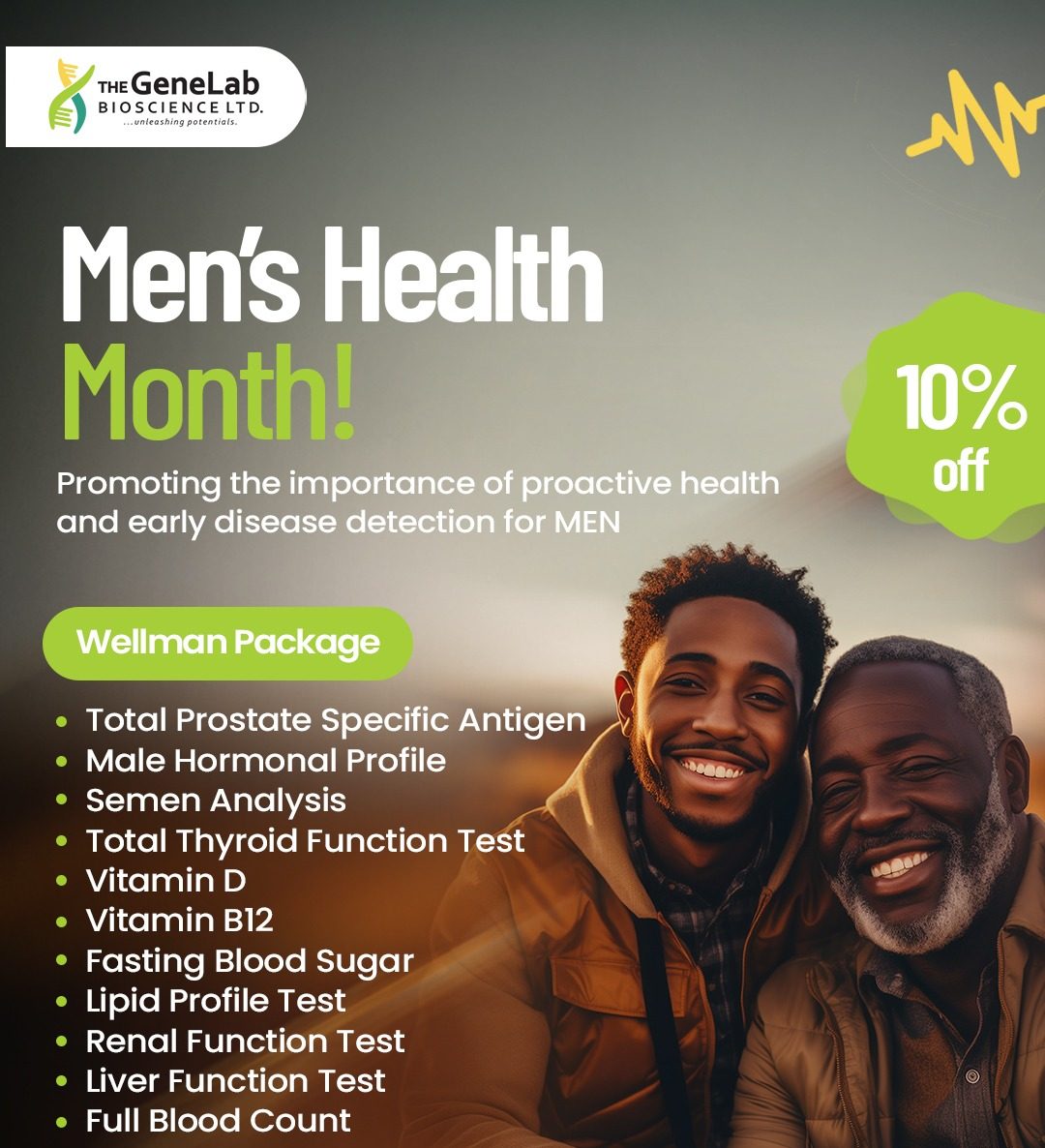
Total Prostate Specific Antigen- measures the level of prostate cancer in the blood and detects benign prostate enlargement.
Male Hormonal Profile- Evaluate hormones like testosterone, prolactin, luteinizing hormone and follicular stimulating hormone: influencing energy, muscle mass, libido and mood.
Semen Analysis- Assesses male fertility (sperm count, motility and morphology).
Total Thyroid Function- Measures thyroid hormones which regulates metabolism, energy and heart rate.
Colorectal cancer marker panel-
Vitamin D Total- helps diagnose or monitor bone health, immune function and erectile function.
Vitamin B12- Essential for nerve function, DNA synthesis, and red blood cell formation; supports cognitive performance and energy.
Fasting Blood Sugar- Screens for prediabetes and diabetes, important for preventing long-term complications.
Lipid Profile Test- Measures cholesterol and triglycerides, high and low density lipoprotein vital for assessing cardiovascular risk.
Renal Function Test- Evaluates kidney function (electrolytes, creatinine, urea).
Liver Function Test- Assesses liver health and enzyme levels.
Full Blood Count- Provides a general health overview, detecting anemia, infection and other blood disorder
Prostate Cancer:
Prostate cancer is a public health concern, especially among African men, and is one of the most commonly diagnosed cancers. Many Nigerian men are diagnosed at advanced stages because of limited awareness and delayed healthcare seeking behaviour. A recent systematic review also identified age, genetic predisposition, family history and lifestyle factors as major contributors to prostate cancer risk in Nigeria.
There are mutations: BRCA1, BRCA2, HOXB13 and ATM that can increase the risk of developing prostate cancer. The GeneLab Bioscience has the capacity in genomic medicine to perform molecular sequencing and genetic testing to identify these mutations at an early stage, thereby clients can start treatments before the disease progresses to an advanced or more difficult to treat stage.
Colorectal Cancer:
Colorectal cancer is a disease that starts in the colon or rectum which is part of the large intestine responsible for absorbing water and forming stool. It usually begins as small, non-cancerous growths called polyps on the inner lining of the bowel. Over time, some of these polyps can gradually develop into cancer.
Risk increases with age, a family history of colorectal cancer, low-fibre diets, high intake of red or processed meats, physical inactivity, smoking and alcohol use.When detected early it is preventable and treatable. We also offer a Colorectal Cancer Marker Panel, which helps in the early detection and monitoring of potential risk. ing the disease. Mutations in the rpoB gene can alter the structure of the binding site, preventing the drug from working properly.
Cardiovascular Disease
There have been several talks about how someone gets a sudden heart attack or sudden shock and just fainting. Cardiovascular disease (CVD), which includes heart attack, stroke, and other disorders of the heart and blood vessels, According to the World Health Organization (WHO), an estimated 17.9 million people die from cardiovascular diseases each year, accounting for approximately 32% of all global deaths. Many of these deaths are linked to preventable risk factors such as high blood pressure, elevated cholesterol, diabetes, smoking, obesity, physical inactivity and unhealthy diets.
What makes cardiovascular disease particularly dangerous is that many men do not experience warning signs until a major event, such as a heart attack or stroke, occurs. Regular screening of blood pressure, blood glucose, cholesterol levels, kidney function, and body weight can identify risk factors early, allowing timely lifestyle changes and medical intervention.
Why Early Detection Matters
Early detection significantly improves outcomes across major men’s health conditions: prostate cancer survival can reach about 99% at early stage but drops to 30–35% when advanced, colorectal cancer survival exceeds 90% in early stages but falls to around 15% at late stage.
The Health Risks You Can’t See But Your DNA Can
While lifestyle factors play a role in the development of prostate cancer, colorectal cancer and cardiovascular disease. Some people inherit genetic changes that make them susceptible to high blood pressure, high cholesterol and other heart issues. By analyzing your DNA, we at The GeneLab Bioscience can identify specific genetic markers that show an increased risk for these conditions, long before any symptoms appear. For example, in prostate cancer, genetic mutations, such as those in the BRCA1 and BRCA2 genes, which are also associated with breast cancer in women, can elevate a man’s risk of developing the disease. By embracing regular screening, you can proactively manage your risks, personalize your care and enjoy a fuller, healthier life.